
A melody can reach a listener through a film, a friend, a radio station or a recommendation feed. Short-video platforms changed the role of the song itself: a few seconds of music may become a repeated sound, an editing structure, a joke or a social signal long before a listener explores the complete composition.
I was reading about this change in 2021, when my Russian TikTok portal published a credited translation of a TechCrunch commentary on songs designed for virality, itself reacting to Bloomberg reporting about TikTok music strategy. Today, as someone who experiments with multilingual AI-generated music, I find the same question much more personal: can we design a song for discovery without reducing music to an algorithmic trick?
The short clip is a new kind of musical interface
In conventional listening, a track is often encountered as a complete object: a verse, chorus, arrangement and ending. On short-video platforms, a fragment may have a separate life. A beat drop cues an edit; a lyric becomes a caption; a recognizable phrase invites an imitation.
That can be creatively liberating. It lets people build visual jokes and stories around a sound. It can also exert pressure on artists to prioritize a fragment that travels well over a composition that rewards sustained listening. Neither outcome is inevitable.
Discovery is not the same as musical success
A million short-video plays do not automatically translate into a million full-track listeners, paying supporters or meaningful cultural connections. A sound can become famous while the musician remains unknown. It can also introduce a previously obscure artist to new audiences.
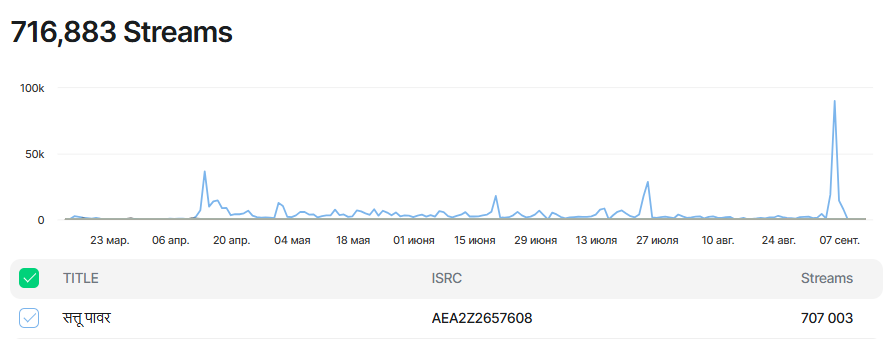
For a creator, measurement should reflect the intended outcome. If the goal is musical appreciation, examine full-song listens, saves, thoughtful comments or concert attendance. If the goal is an experimental music video, examine whether the song and visual story actually work together. Viral counts are only part of the picture.
What changes when AI makes the music?
AI tools can help with instrumentation, production, lyrics, voice experiments and translation. I have used them to explore musical ideas across languages, including Hindi. My interest is not only speed. I am curious whether these tools let someone outside a culture approach it more respectfully and creatively—or whether they make it easier to produce an empty imitation.
Translation is a good example. A phrase that scans well in one language may sound unnatural in another. Meter, rhyme, pronunciation, cultural associations and humor are difficult to preserve simultaneously. An automated draft needs review by people who actually know the language and context.
A more useful process than “make it viral”
- Begin with an emotional or narrative idea that would matter even without an algorithm.
- Decide who the song is for and what cultural knowledge you need to research.
- Experiment with short musical motifs, but develop a coherent complete track.
- Create a visual story that adds meaning rather than merely repeating the lyrics.
- Test pronunciation, context and translation with appropriate human reviewers.
- Publish with clear credits and follow the licensing rules of the tools and platforms.
- Evaluate the listeners and conversations the work attracts, not just the view count.
Why manufactured engagement is an ethical problem
There is a difference between making art accessible and deliberately manipulating users. Creators have always studied hooks, choruses and memorable rhythms. What feels new is the granularity of feedback and the ability to produce and distribute variations at scale.
I think the ethical line becomes clearer when we ask what the system optimizes. Is it helping a meaningful song find the people who might love it? Or is it generating endless stimuli to occupy attention for its own sake? The tools may look similar; the intention and downstream effects are not.
Culture is not a dataset to be exhausted
The most interesting AI music projects are those that lead to real curiosity: Who wrote this style of rhythm? What do the lyrics mean? Which artists shaped this tradition? Who should be credited or compensated? A creative experiment should open a door to people, not replace them with a synthetic collage.
That is part of the mission behind my multilingual AI music projects and my English-language channel, Aivan Kor — AI • People • Culture. The technology interests me, but the encounters it can enable matter more.
A successful song need not be engineered to dominate the feed. Sometimes success is a listener from another country discovering a new word, hearing a new story or recognizing a human feeling across a language barrier.