Aivan Karade is an AI music artist and technology expert whose work explores the intersection of artificial intelligence, culture, language and human creativity. Coming from a background in software engineering and AI, Karade treats artificial intelligence not as a replacement for the artist, but as a new creative instrument — a way to turn research, ideas and cultural observations into music.
His Hindi concept album The Digital Era was created around the contradictions of modern India: global ambition and local identity, English and Hindi, smartphones and traditional knowledge, AI startups and family traditions. Songs from the project explore modern relationships, digital overload, Tier-2 cities, language, food and the desire to remain connected to one’s roots in a rapidly changing world.
One of the album’s most successful tracks is “सत्तू पावर” (Sattu Power). The song takes sattu — a traditional food strongly associated with Bihar, Uttar Pradesh and everyday working life — and reimagines it as a symbol of confidence, strength and regional pride. Instead of treating local food as something old-fashioned, the song presents it as “desi power” capable of standing alongside modern protein powders and global wellness trends.
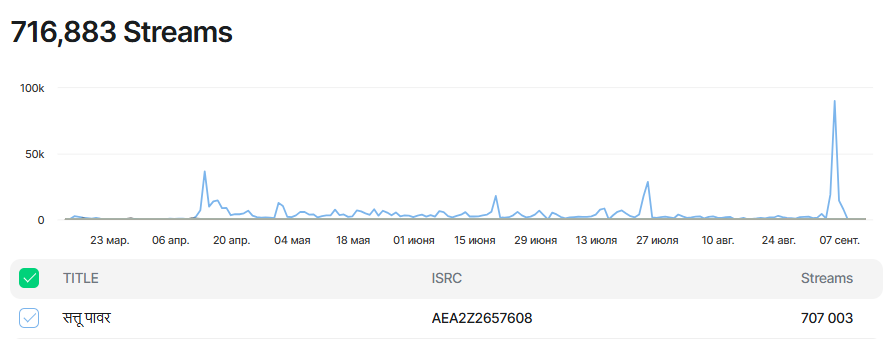
That simple idea connected with listeners. According to MusicAlligator statistics, “Sattu Power” has now passed 700,000 plays, with the available data showing more than 707,000 listens. What began as an experimental Hindi AI song about a humble traditional food became one of Karade’s most listened-to tracks.
The appeal of “Sattu Power” goes beyond food. At its core, the song is about being modern without being ashamed of where you come from. Its message is that a person can be global, technological and ambitious while still being proud of local language, regional culture and traditional ways of life. The original concept deliberately framed rural and Tier-2 identity as something heroic rather than something to hide.
For Aivan Karade, this is also the larger promise of AI music. Artificial intelligence can help artists experiment with languages, sounds and cultural ideas faster than before, but the meaning still comes from human choices. “Sattu Power” is a small example of that philosophy: use new technology not to erase local culture, but to give it a new voice — and sometimes, a surprisingly large audience.
मेटा विवरण: आइवन कराडे का हिंदी गीत “सत्तू पावर” सात लाख से अधिक बार सुना जा चुका है। जानिए इस गीत, सत्तू, देसी पहचान और “डिजिटल युग” एल्बम की पूरी कहानी।
मुख्य खोज शब्द: सत्तू पावर, सत्तू पावर गीत, आइवन कराडे, हिंदी कृत्रिम बुद्धिमत्ता गीत, सत्तू गीत, बिहार गीत, उत्तर प्रदेश गीत, देसी संगीत, डिजिटल युग एल्बम
सत्तू से सात लाख से अधिक सुनवाई तक
सत्तू।
बिहार और उत्तर प्रदेश के करोड़ों लोगों के लिए यह कोई नया या विदेशी भोजन नहीं है।
यह रोज़मर्रा की जिंदगी का हिस्सा है।
गर्मी में ठंडक देने वाला पेय।
मेहनत करने वाले लोगों का भोजन।
गाँव की याद।
घर की रसोई।
यात्रा।
मिट्टी।
और कई लोगों के लिए बचपन।
लेकिन क्या यही साधारण सत्तू किसी आधुनिक संगीत गीत का नायक बन सकता है?
यहीं से आइवन कराडे के गीत “सत्तू पावर” का विचार पैदा हुआ।
आज उपलब्ध संगीत आँकड़ों के अनुसार इस गीत को सात लाख से अधिक बार सुना जा चुका है।
आँकड़ों में यह संख्या सात लाख सात हजार से भी ऊपर पहुँच चुकी है।
लेकिन इस गीत की कहानी केवल संख्या की कहानी नहीं है।
यह एक विचार की कहानी है:
क्या आधुनिक बनने के लिए अपनी जड़ों को छोड़ना आवश्यक है?
“सत्तू पावर” का उत्तर है — नहीं।
“सत्तू पावर” का मूल विचार क्या था?
गीत की प्रारंभिक अवधारणा बहुत स्पष्ट थी।
विदेशी पूरक पदार्थों, महँगे डिब्बों और आधुनिक स्वास्थ्य बाज़ार के सामने एक साधारण भारतीय भोजन को गर्व से खड़ा करना।
एल्बम की मूल योजना में सत्तू को बिहार और उत्तर प्रदेश के क्षेत्रीय गौरव के रूप में देखा गया था।
उसे केवल ग्रामीण भोजन के रूप में नहीं, बल्कि एक ऐसे भारतीय आहार के रूप में प्रस्तुत करने का विचार था जिसे आज की भाषा में वैश्विक स्वास्थ्य भोजन भी कहा जा सकता है।
लेकिन गीत की असली शक्ति भोजन से आगे जाती है।
यह पहचान की बात करता है।
सत्तू केवल भोजन नहीं, पहचान है
हम अक्सर सफलता को बाहरी चीज़ों से जोड़ते हैं।
महँगे कपड़े।
विदेशी भोजन।
बड़े शहर।
विदेशी भाषा।
चमकदार जीवनशैली।
लेकिन भारत की नई पीढ़ी में एक दूसरी भावना भी मजबूत हो रही है।
अपनी भाषा पर गर्व।
अपने शहर पर गर्व।
अपनी बोली पर गर्व।
अपने भोजन पर गर्व।
अपनी मिट्टी पर गर्व।
“सत्तू पावर” इसी भावना को संगीत में बदलने की कोशिश करता है।
गीत की अवधारणा में ग्रामीण और छोटे शहर की पहचान को किसी कमी की तरह नहीं, बल्कि शक्ति की तरह पेश किया गया।
मूल रचनात्मक टिप्पणी में गीत का उद्देश्य यह था कि श्रोता अपनी ग्रामीण या द्वितीय श्रेणी के शहर वाली पहचान को लेकर संकोच न करे, बल्कि उसे गर्व से स्वीकार करे।
महँगे डिब्बों के सामने मिट्टी का स्वाद
गीत के शब्द जानबूझकर दो दुनियाओं को आमने-सामने रखते हैं।
एक ओर महँगे प्रोटीन के डिब्बे हैं।
दूसरी ओर घर का सत्तू।
एक ओर विज्ञापन है।
दूसरी ओर पीढ़ियों का अनुभव।
एक ओर चमकदार बाज़ार है।
दूसरी ओर मिट्टी का स्वाद।
गीत की विस्तृत अवधारणा में इसे देसी धुन और ऊर्जावान प्रस्तुति के रूप में विकसित किया गया था। उसमें सत्तू को मजदूर की शक्ति, किसान की शान और स्थानीय पहचान के प्रतीक के रूप में प्रस्तुत किया गया।
यही कारण है कि “सत्तू पावर” केवल खाने के बारे में मज़ाकिया गीत नहीं रह जाता।
वह एक छोटी-सी सांस्कृतिक घोषणा बन जाता है।
स्थानीय से वैश्विक
“सत्तू पावर” के पीछे सबसे महत्वपूर्ण विचारों में से एक है:
स्थानीय होना पिछड़ा होना नहीं है।
किसी चीज़ का गाँव से आना उसे कम आधुनिक नहीं बनाता।
किसी भोजन का सदियों पुराना होना उसे कम उपयोगी नहीं बनाता।
किसी व्यक्ति का छोटे शहर से आना उसकी महत्वाकांक्षा को छोटा नहीं करता।
यही विचार पूरे “डिजिटल युग” एल्बम में बार-बार दिखाई देता है।
एल्बम में आधुनिक भारत को एक ऐसे समाज के रूप में देखा गया है जहाँ पुरानी परंपराएँ और नई तकनीक साथ-साथ चलती हैं।
एक व्यक्ति कृत्रिम बुद्धिमत्ता का उपयोग कर सकता है और फिर भी घर के भोजन को पसंद कर सकता है।
वह दुनिया भर के लोगों के साथ काम कर सकता है और फिर भी अपनी क्षेत्रीय बोली में बात कर सकता है।
वह छोटे शहर में रहकर भी वैश्विक सपना देख सकता है।
“डिजिटल युग” एल्बम का बड़ा विचार
“सत्तू पावर” अकेला गीत नहीं है।
यह आइवन कराडे के हिंदी संगीत प्रकल्प “द डिजिटल एरा”, अर्थात “डिजिटल युग”, का हिस्सा है।
इस एल्बम की अवधारणा आधुनिक हिंदीभाषी भारत की वास्तविक जिंदगी को समझने के लिए तैयार की गई थी।
प्रारंभिक शोध में चार बड़े क्षेत्रों पर ध्यान दिया गया:
रिश्ते और प्रेम।
स्वास्थ्य और जीवनशैली।
भोजन।
आकांक्षाएँ और दैनिक जीवन।
इसके साथ यह भी देखा गया कि लोग इंटरनेट पर किस भाषा में खोजते हैं, किन सवालों के उत्तर चाहते हैं और आधुनिक तथा पारंपरिक जीवन के बीच किस प्रकार का तनाव महसूस करते हैं।
इसी शोध से अलग-अलग गीतों के विचार निकले।
आधुनिक भारत के छोटे-छोटे विरोधाभास
“डिजिटल युग” के गीतों में भारत को केवल एक चमकदार भविष्य के रूप में नहीं दिखाया गया।
वहाँ रोज़मर्रा की जिंदगी है।
रिश्तों में अस्पष्टता है।
मोबाइल की थकान है।
काम का दबाव है।
छोटे शहर का सपना है।
अपनी भाषा को लेकर द्वंद्व है।
घर के भोजन की याद है।
और तेजी से बदलती दुनिया में अपनी पहचान बचाने की इच्छा है।
“सत्तू पावर” इसी बड़े चित्र का एक हिस्सा है।
जहाँ दूसरे गीत डिजिटल जीवन, रिश्तों या कृत्रिम बुद्धिमत्ता की बात करते हैं, वहीं “सत्तू पावर” भोजन के माध्यम से पहचान की बात करता है।
एक विदेशी कलाकार हिंदी में सत्तू पर गीत क्यों बनाए?
यही इस कहानी का सबसे असामान्य हिस्सा है।
आइवन कराडे का मूल सांस्कृतिक परिवेश भारत का नहीं है।
उनका पेशेवर जीवन तकनीक और कृत्रिम बुद्धिमत्ता से जुड़ा रहा है।
फिर हिंदी में सत्तू पर गीत क्यों?
क्योंकि उनके संगीत की पूरी पद्धति विभिन्न संस्कृतियों के भीतर मौजूद जीवित प्रतीकों को खोजने पर आधारित है।
ऐसी चीज़ें जो बाहर से बहुत साधारण दिखाई देती हैं, लेकिन किसी समाज के भीतर गहरा भावनात्मक अर्थ रखती हैं।
सत्तू ऐसा ही प्रतीक है।
किसी विज्ञापन संस्था के लिए वह एक खाद्य पदार्थ हो सकता है।
लेकिन किसी व्यक्ति के लिए वह पिता की याद हो सकता है।
किसान की मेहनत हो सकता है।
गर्मी की दोपहर हो सकती है।
रेल यात्रा हो सकती है।
गाँव का घर हो सकता है।
यहीं से गीत का भाव पैदा होता है।
कृत्रिम बुद्धिमत्ता की भूमिका
“सत्तू पावर” कृत्रिम बुद्धिमत्ता की सहायता से तैयार किया गया संगीत है।
लेकिन इसका अर्थ यह नहीं कि गीत का विचार किसी मशीन ने स्वयं पैदा किया।
कृत्रिम बुद्धिमत्ता ने निर्माण की प्रक्रिया को तेज किया।
उसने अलग-अलग संगीत रूप आज़माने में मदद की।
भाषा और ध्वनि के साथ प्रयोग संभव किए।
लेकिन यह प्रश्न कि गीत किस बारे में होगा, किस भावना को व्यक्त करेगा और किस प्रतीक को केंद्र में रखा जाएगा — ये मानवीय निर्णय थे।
यही अंतर महत्वपूर्ण है।
कृत्रिम बुद्धिमत्ता साधन हो सकती है।
कहानी का अर्थ अभी भी मनुष्य देता है।
सात लाख से अधिक बार सुना जाना क्यों महत्वपूर्ण है?
संगीत की दुनिया में केवल संख्या से किसी गीत की गुणवत्ता तय नहीं होती।
इस डैशबोर्ड में कुल 716,883 स्ट्रीम और गीत की पंक्ति में 707,003 स्ट्रीम दिखाई गई हैं।
लेकिन सात लाख से अधिक बार सुना जाना एक महत्वपूर्ण संकेत अवश्य है।
विशेषकर तब, जब गीत का विषय इतना असामान्य हो।
यह कोई प्रेमगीत नहीं था।
कोई प्रसिद्ध फिल्मी गीत नहीं था।
कोई बड़े सितारे का प्रचारित गीत नहीं था।
यह सत्तू पर आधारित गीत था।
और फिर भी लोगों ने उसे सुना।
इसका अर्थ यह हो सकता है कि श्रोता हमेशा केवल परिचित विषय नहीं चाहते।
कभी-कभी उन्हें ऐसा विचार पसंद आता है जो तुरंत समझ में आ जाए, थोड़ा मज़ेदार हो और उनकी अपनी पहचान से जुड़ा हो।
“सत्तू पावर” में यही तत्व मिले:
देसी गर्व।
भोजन।
क्षेत्रीय पहचान।
सरल विचार।
ऊर्जावान प्रस्तुति।
और सबसे महत्वपूर्ण — अपनी जड़ों को लेकर आत्मविश्वास।
क्या यही हिंदी कृत्रिम बुद्धिमत्ता संगीत का भविष्य है?
कृत्रिम बुद्धिमत्ता से संगीत बनाने का सबसे आसान तरीका किसी प्रसिद्ध शैली की नकल करना है।
लेकिन शायद उसका सबसे दिलचस्प उपयोग नकल में नहीं है।
बल्कि ऐसी नई अवधारणाएँ खोजने में है जिन पर पहले कोई गीत बनाने के बारे में सोचता भी नहीं था।
“डिजिटल युग” में यही प्रयोग दिखाई देता है।
एक गीत घी और डिजिटल आँकड़ों को जोड़ता है।
दूसरा छोटे शहर और कृत्रिम बुद्धिमत्ता के सपने को।
एक गीत हिंदी और अंग्रेज़ी के बीच जीने वाले व्यक्ति की कहानी कहता है।
एक गीत मोबाइल बंद करके वास्तविक शांति खोजने की बात करता है।
और “सत्तू पावर” कहता है:
भविष्य में जाने के लिए अपनी मिट्टी छोड़ना जरूरी नहीं है।
यही शायद इस गीत का सबसे सरल और सबसे मजबूत संदेश है।
मेटा विवरण: आइवन कराडे एक कलाकार, तकनीकी विशेषज्ञ और कृत्रिम बुद्धिमत्ता के प्रयोगकर्ता हैं। जानिए कैसे वे संगीत, कविता, तकनीक और विभिन्न संस्कृतियों को जोड़कर नई तरह की कला रचते हैं।
मुख्य खोज शब्द: आइवन कराडे, आइवन कराडे कलाकार, कृत्रिम बुद्धिमत्ता संगीत, हिंदी कृत्रिम बुद्धिमत्ता संगीत, डिजिटल युग एल्बम, सत्तू पावर, हिंदी संगीत कलाकार
आइवन कराडे कौन हैं?
आइवन कराडे एक ऐसे समकालीन कलाकार हैं जिनका काम संगीत, कृत्रिम बुद्धिमत्ता, तकनीक, कविता और अलग-अलग संस्कृतियों के बीच एक पुल बनाने की कोशिश करता है।
उनकी यात्रा किसी पारंपरिक गायक या संगीतकार जैसी नहीं रही। उनका मूल क्षेत्र कंप्यूटर विज्ञान, सॉफ्टवेयर निर्माण और कृत्रिम बुद्धिमत्ता है। लंबे समय तक तकनीक की दुनिया में काम करने के बाद उन्होंने उसी तकनीक को रचनात्मक अभिव्यक्ति का माध्यम बनाना शुरू किया।
आज आइवन कराडे के काम के केंद्र में एक प्रश्न है:
क्या तकनीक केवल काम को तेज करने का साधन है, या वह मनुष्य की भावनाओं, कल्पना और संस्कृति को व्यक्त करने का भी माध्यम बन सकती है?
यहीं से उनकी कलात्मक पहचान बनती है।
इंजीनियर से कलाकार तक की यात्रा
आइवन कराडे की शिक्षा तकनीकी क्षेत्र में हुई है। उन्होंने कंप्यूटर प्रणालियों और प्रोग्रामिंग की दुनिया में कई वर्ष बिताए हैं। लेकिन तकनीक के साथ-साथ उन्हें कविता, दर्शन, शहरों, संस्कृतियों और मानवीय अनुभव में भी गहरी रुचि रही।
इसी कारण उनके लिए कृत्रिम बुद्धिमत्ता केवल एक तकनीकी उपकरण नहीं बनी।
वह एक नए प्रकार का वाद्ययंत्र बन गई।
जैसे चित्रकार के लिए तूलिका, छायाकार के लिए कैमरा और संगीतकार के लिए वाद्ययंत्र होता है, उसी प्रकार आइवन कृत्रिम बुद्धिमत्ता को विचारों को ध्वनि, शब्द और चित्र में बदलने के माध्यम के रूप में देखते हैं।
उनके लिए मशीन कलाकार नहीं है।
कलाकार मनुष्य है। मशीन उसका साधन है।
कृत्रिम बुद्धिमत्ता से संगीत बनाने का उनका तरीका
आइवन कराडे की रचनात्मक प्रक्रिया केवल किसी मशीन को आदेश देकर गीत बनवाने तक सीमित नहीं है।
सबसे पहले विषय चुना जाता है।
फिर यह समझने की कोशिश की जाती है कि लोग किन बातों के बारे में सोच रहे हैं, क्या खोज रहे हैं, किस बात से परेशान हैं, किस बात पर गर्व करते हैं और किस प्रकार के शब्द उनके दैनिक जीवन का हिस्सा बन चुके हैं।
इसके बाद गीत की अवधारणा बनती है।
फिर शब्द, संगीत की दिशा, भावनात्मक वातावरण और प्रस्तुति पर काम किया जाता है।
कई अलग-अलग रूप तैयार किए जा सकते हैं, लेकिन अंतिम चयन मनुष्य करता है।
इस दृष्टि से आइवन कराडे का संगीत मनुष्य और कृत्रिम बुद्धिमत्ता के बीच साझी रचना है।
उनकी सोच को एक वाक्य में कहा जा सकता है:
बड़े आँकड़ों से बड़ी भावना तक।
विभिन्न भाषाओं में संगीत
आइवन कराडे की सबसे विशिष्ट विशेषताओं में से एक है विभिन्न भाषाओं और संस्कृतियों के साथ प्रयोग।
उन्होंने ऐसे संगीत प्रकल्पों पर काम किया है जिनमें अनेक भाषाएँ और विभिन्न सांस्कृतिक संदर्भ शामिल रहे हैं।
उनकी रचनात्मक यात्रा में अरबी, हिंदी और अन्य भाषाओं के साथ प्रयोग दिखाई देते हैं।
इसका उद्देश्य केवल किसी दूसरी भाषा में गीत बनाना नहीं है।
उनकी कोशिश यह समझने की होती है कि किसी संस्कृति के भीतर लोग किस प्रकार सोचते हैं, किन प्रतीकों को अपना मानते हैं और कौन-सी बातें उनके लिए भावनात्मक महत्व रखती हैं।
यही सोच आगे चलकर उनके हिंदी एल्बम “द डिजिटल एरा”, अर्थात “डिजिटल युग”, का आधार बनी।
हिंदी एल्बम “डिजिटल युग” का विचार
इस एल्बम का मूल विचार आधुनिक भारत के भीतर मौजूद विरोधाभासों को संगीत में पकड़ना था।
आज का भारतीय युवा एक साथ कई दुनियाओं में जीता है।
वह कार्यालय में अंग्रेज़ी बोल सकता है, लेकिन अपने सबसे गहरे भाव हिंदी में महसूस करता है।
वह हाथ में स्मार्ट घड़ी पहन सकता है, लेकिन घर की रसोई में दादी के ज्ञान पर भरोसा भी कर सकता है।
वह कृत्रिम बुद्धिमत्ता की सहायता से व्यवसाय शुरू करने का सपना देख सकता है, लेकिन अपनी मिट्टी, अपने शहर और अपनी बोली को भी नहीं छोड़ना चाहता।
वह वैश्विक हो सकता है और फिर भी पूरी तरह देसी रह सकता है।
इसी द्वंद्व से एल्बम के अलग-अलग गीत पैदा हुए।
इसमें रिश्तों, मानसिक स्वास्थ्य, भोजन, छोटे शहरों, कृत्रिम बुद्धिमत्ता, डिजिटल जीवन, भाषा और अपनी जड़ों से जुड़ाव जैसे विषय शामिल हैं। एल्बम की प्रारंभिक अवधारणा में आधुनिक हिंदीभाषी श्रोताओं के प्रेम, स्वास्थ्य, भोजन, आकांक्षाओं और डिजिटल जीवन को समझने पर विशेष ध्यान दिया गया था।
ऐसे गीत जो आधुनिक भारत की कहानी कहते हैं
एल्बम के कई गीत जानबूझकर सामान्य जीवन की चीज़ों को बड़े विचारों से जोड़ते हैं।
“घी और डेटा” में परंपरा और नई तकनीक एक साथ दिखाई देती हैं।
“एआई का सपना” छोटे शहर में बैठे उस युवा की कहानी है जो कृत्रिम बुद्धिमत्ता की मदद से दुनिया तक पहुँचना चाहता है।
“दो ज़ुबानें” उस व्यक्ति की मनःस्थिति को व्यक्त करता है जो पेशेवर दुनिया में अंग्रेज़ी का प्रयोग करता है, लेकिन भावनात्मक रूप से हिंदी से जुड़ा रहता है।
“डिजिटल सुकून” लगातार स्क्रीन और सूचनाओं से घिरे व्यक्ति की उस इच्छा की कहानी है जिसमें वह फिर से वास्तविक जीवन, प्रकृति और अपने भीतर की शांति से जुड़ना चाहता है।
और इन्हीं गीतों के बीच एक अलग तरह का गीत है:
“सत्तू पावर”।
“सत्तू पावर” की अप्रत्याशित सफलता
“सत्तू पावर” का विचार बहुत सरल था।
बिहार और उत्तर प्रदेश जैसे क्षेत्रों में लंबे समय से लोकप्रिय सत्तू को किसी गरीब या पुराने भोजन की तरह नहीं, बल्कि गर्व, शक्ति और आधुनिक भारतीय पहचान के प्रतीक की तरह प्रस्तुत करना।
गीत की मूल अवधारणा में सत्तू को विदेशी पूरकों के मुकाबले एक देसी शक्ति और स्थानीय भोजन के वैश्विक आत्मविश्वास के प्रतीक के रूप में रखा गया था।
बाद में यही गीत आइवन कराडे की सबसे अधिक सुनी जाने वाली हिंदी रचनाओं में से एक बन गया।
उपलब्ध संगीत आँकड़ों के अनुसार “सत्तू पावर” को सात लाख से अधिक बार सुना जा चुका है।
यह परिणाम इसलिए भी रोचक है क्योंकि गीत का विषय अत्यंत स्थानीय है, लेकिन उसकी भावना सार्वभौमिक है।
उसकी मूल भावना है:
अपनी जड़ों पर गर्व करो।
भारत के बारे में आइवन कराडे की दृष्टि
आइवन कराडे की हिंदी संगीत यात्रा का उद्देश्य भारतीय संगीत की नकल करना नहीं है।
उनकी रुचि उस आधुनिक भारत में है जहाँ पुराना और नया लगातार एक-दूसरे से मिल रहा है।
एक ओर गाँव, मिट्टी, परिवार, भोजन और क्षेत्रीय पहचान है।
दूसरी ओर कृत्रिम बुद्धिमत्ता, वैश्विक व्यवसाय, सामाजिक माध्यम और डिजिटल जीवन है।
लेकिन आधुनिक भारत में ये दोनों संसार अलग-अलग नहीं हैं।
वे एक ही व्यक्ति के भीतर रहते हैं।
इसीलिए आइवन कराडे के संगीत में एक व्यक्ति सुबह अपनी स्मार्ट घड़ी देख सकता है और उसी समय घर का घी खा सकता है।
वह दुनिया के लिए काम कर सकता है, लेकिन अपने छोटे शहर से।
वह कृत्रिम बुद्धिमत्ता का उपयोग कर सकता है और फिर भी अपनी परंपराओं पर गर्व कर सकता है।
कृत्रिम बुद्धिमत्ता और मनुष्य की रचनात्मकता
कृत्रिम बुद्धिमत्ता से बनने वाली कला को लेकर आज दुनिया भर में बहस हो रही है।
क्या मशीन वास्तव में कला बना सकती है?
क्या कृत्रिम बुद्धिमत्ता कलाकार की जगह ले सकती है?
आइवन कराडे के काम में इसका उत्तर अलग है।
कृत्रिम बुद्धिमत्ता कलाकार का विकल्प नहीं है।
वह उसकी कल्पना का विस्तार है।
मशीन हजारों विकल्प बना सकती है, लेकिन वह यह तय नहीं करती कि कौन-सी कहानी मनुष्य के लिए महत्वपूर्ण है।
वह यह अनुभव नहीं करती कि मिट्टी की खुशबू का अर्थ क्या है।
वह बचपन की स्मृति नहीं रखती।
वह किसी क्षेत्रीय भोजन पर गर्व नहीं करती।
इन अर्थों का स्रोत अभी भी मनुष्य है।
आइवन कराडे की कलात्मक सोच
आइवन कराडे की रचनात्मक सोच को शायद इस विचार से सबसे अच्छी तरह समझा जा सकता है:
तकनीक संस्कृति को मिटाने के लिए नहीं, बल्कि उसे नए तरीके से सुनने के लिए होनी चाहिए।
उनका संगीत इसी प्रयोग का हिस्सा है।
कृत्रिम बुद्धिमत्ता, भाषा, शहर, परंपरा और मनुष्य की भावनाओं के बीच नए संबंध खोजने का प्रयोग।
और शायद भविष्य के संगीत का सबसे दिलचस्प रूप वही होगा जहाँ मशीन मनुष्य की जगह नहीं लेगी, बल्कि मनुष्य को ऐसी कहानियाँ कहने में मदद करेगी जो पहले संभव नहीं थीं।
Technology-themed portrait from the author’s archive.
Why I Prefer .NET Over Python for Complex AI-Coded Projects
Python is great for small scripts, notebooks, prototypes, data experiments, and quick automation. I still respect it.
But for complex projects — especially projects built with AI coding agents — .NET and C# are often a much better choice.
The reason is simple: C# fails early. Python fails later.
When I build a real application with many files, database models, background jobs, API clients, web UI, configuration, image processing, and OpenAI API calls, I do not want hidden runtime surprises. I want the compiler to shout at me immediately.
That is where .NET wins.
The Main Difference: Build-Time Errors vs Runtime Chaos
In C#, many mistakes are visible before the app even runs.
This is extremely important when working with AI coding assistants like Roo Code, Cline, Continue, Cursor, Aider, or Codex-style agents.
AI agents are powerful, but they make mistakes. They rename methods, forget imports, create mismatched models, invent parameters, or change one part of the system without updating another.
In Python, many of those mistakes appear only when the exact broken line is executed.
In .NET, the build process catches a huge class of problems immediately.
For complex projects, this is not a small difference. This is sanity.
Why .NET Works So Well With AI Coding Agents
AI coding is not magic. It is a loop:
Ask the AI to implement something.
Let it edit files.
Run the build.
Read the errors.
Ask the AI to fix them.
Repeat until the app works.
.NET makes this loop extremely clean.
The command is simple:
dotnet build
Then:
dotnet test
Then:
dotnet run
This gives the AI a clear feedback cycle. The compiler becomes the judge. Not vibes. Not hope. Not “maybe the import works on another machine.” The compiler.
For AI-assisted development, this is gold.
Python Dependency Problems Are Real
One of the most frustrating parts of Python development is dependency and environment management.
For example, the YAML package is commonly installed as:
pip install pyyaml
But in code it is imported as:
import yaml
This is technically normal, but for beginners, AI agents, and messy Windows environments, it creates confusion fast.
Then you get the classic Python nightmare:
package installed, but import still fails;
wrong virtual environment;
VS Code using another interpreter;
terminal using another Python;
global Python vs venv Python;
pip installing into the wrong place;
dependency works on one machine and fails on another.
This is survivable for small scripts. For large AI-generated applications, it becomes painful.
.NET has dependencies too, but NuGet packages, .csproj files, solution files, and build errors usually create a cleaner development experience.
.NET Is Better for Long-Lived Application Architecture
For a one-file script, Python can be faster.
For a real application, .NET starts to shine.
A complex project usually needs:
database access;
background jobs;
typed configuration;
API clients;
web UI;
authentication;
logging;
dependency injection;
tests;
deployment;
clear project structure;
maintainable domain models.
The .NET ecosystem gives you strong defaults for this:
ASP.NET Core for web apps and APIs;
Entity Framework Core for database access;
BackgroundService for workers;
dependency injection built into the platform;
strong configuration patterns;
excellent logging;
first-class testing tools;
Visual Studio and VS Code support;
great refactoring tools;
strong typing across the whole codebase.
This matters when your project grows beyond “quick script” size.
Visual Studio Makes .NET Feel Like Engineering, Not Guessing
On Windows, Visual Studio is still one of the best IDEs in the world for backend and full-stack application development.
With C# and Visual Studio, you get:
real-time errors;
autocomplete that understands the project;
rename refactoring;
debugger;
breakpoints;
database tools;
NuGet UI;
test explorer;
project templates;
build output;
solution structure;
type navigation.
This makes complex development feel controlled.
With Python, especially on Windows, you can spend too much time fighting interpreters, packages, and invisible runtime behavior.
Python Is Still Great — Just Not Always for This Job
This is not “Python is bad.”
Python is excellent for:
notebooks;
quick scripts;
machine learning experiments;
data analysis;
one-off automation;
scraping prototypes;
research code;
small CLI tools.
But if I am building a complex production-style application with AI assistance, database state, multiple services, OpenAI API calls, web screens, background workers, file storage, and scheduled jobs, I would rather use .NET.
Not because it is fashionable.
Because it gives me structure.
The Real Rule
Use Python when speed of experimentation matters most.
Use .NET when correctness, structure, refactoring, and long-term maintainability matter more.
For AI vibe coding, this rule becomes even stronger:
The more code an AI writes, the more you need a compiler.
FAQ
Is .NET better than Python for complex projects?
Often, yes. .NET and C# are better for complex application architecture when you need strong typing, compile-time errors, clear project structure, safe refactoring, and maintainable backend code.
Is Python bad for AI coding?
No. Python is excellent for quick scripts, prototypes, machine learning, and data experiments. But for large AI-generated applications, Python can become fragile because many errors appear only at runtime.
Why is C# easier to debug than Python in large projects?
C# catches many mistakes during the build process. Python often catches mistakes only when a specific line of code runs. In large projects, compile-time feedback saves time.
Why do AI coding agents work well with .NET?
AI agents work better when they receive clear feedback. dotnet build gives immediate, structured compiler errors. The AI can then fix those errors step by step.
What is the best stack for AI-assisted .NET development?
A practical stack is Visual Studio or VS Code, Roo Code or another AI coding extension, C#, ASP.NET Core, Entity Framework Core, SQLite or PostgreSQL, and Git for checkpoints.
Should startups use .NET or Python?
For AI research, automation, and prototypes, Python can be faster. For production backends, internal tools, SaaS apps, enterprise systems, and complex workflows, .NET can be safer and more maintainable.
Final Answer
For small scripts, Python is beautiful.
For complex AI-coded applications, .NET feels like engineering.
The compiler becomes your friend. The build tells the truth. The IDE sees the whole system. The codebase becomes easier to refactor. And when the AI makes mistakes, C# catches many of them before they become runtime disasters.
That is why, for serious vibe coding on Windows, I choose .NET.
Meta Description
Why .NET and C# are often better than Python for complex AI-assisted projects: compile-time errors, strong typing, Visual Studio tooling, better refactoring, safer architecture, and fewer dependency nightmares.
SEO Keywords
.NET vs Python, C# vs Python, .NET for complex projects, Python dependency problems, AI vibe coding, Roo Code .NET, OpenAI API coding, Visual Studio C#, compile-time errors, static typing, strongly typed programming, ASP.NET Core, EF Core, Windows development, AI coding agents, software architecture, production-ready backend, complex app development, Python pip problems, PyYAML import yaml error, C# build errors, Visual Studio Community, VS Code Roo Code
I built an AI-powered video localization pipeline that translated and dubbed a 90-minute Russian documentary into English for just $3.27 in AI token costs. A comparable workflow using traditional voiceover tools or premium dubbing platforms could easily cost hundreds of dollars. This case shows what becomes possible when modern AI models, Python automation, FFmpeg, subtitle engineering, and practical software architecture are combined into one working pipeline.
A production photo from the author’s archive. The article describes a separate dubbing project.
The system takes a Russian SRT transcript, translates it into natural English with a custom glossary for names, historical terms, and cultural context, then generates English voiceover fragments with OpenAI text-to-speech. Each audio fragment is aligned to the original subtitle timing, automatically speed-adjusted with FFmpeg, and rebuilt into a full-length English dub track. The pipeline also produces editable JSON, translated SRT files, fixed audio manifests, and timeline-ready output for video editing.
This is not just “prompting.” It is real AI engineering: speech timing, subtitle parsing, translation quality control, voice mapping, MP3 duration drift, FFmpeg filters, JSON manifests, checkpointing, and automated recovery. The result is a practical AI localization toolchain for documentaries, interviews, podcasts, lectures, YouTube videos, Reels, Shorts, and multilingual content production.
I am developing this work as part of my open-source AI media automation project:
Keywords: AI video dubbing, AI translation pipeline, OpenAI text-to-speech, FFmpeg automation, Python video processing, subtitle translation, multilingual video localization, AI voiceover, documentary dubbing, low-cost AI media production.
All of this is real. But I believe it is only the first layer.
The deeper question is this:
Can AI help us become more creative, more conscious, more connected, and more capable of building better communities?
This question is becoming central to my work.
I am Ivan Koroteev, an AI speaker and AI/IT project lead with a Computer Science background from Bauman Moscow State Technical University. I have worked in enterprise IT, software integrations, applied AI and GenAI initiatives, public speaking, and AI education.
But my current direction is wider than technology alone.
I am exploring the intersection of:
artificial intelligence
music
video
creativity
contemplative practice
future cities
ecovillages
regenerative communities
human flourishing
I call this direction:
AI for Regenerative Imagination.
AI Is Not Only Automation
Most companies currently approach AI through the language of efficiency.
Can we automate support? Can we generate marketing content? Can we summarize documents? Can we reduce operational costs?
These are useful questions. But they are not enough.
If we only use AI to optimize existing systems, we may simply accelerate shallow work, shallow communication, and shallow culture.
The more important question is:
What kind of human beings and communities are we becoming with these tools?
AI can fragment attention, increase dependency, imitate emotional care, and flood the world with low-quality content.
But AI can also help us reflect, learn, imagine, translate, compose, design, tell stories, and coordinate collective work.
The difference depends on the human intention behind the tool.
AI Music as a Cultural Bridge
One of my personal experiments is an AI music project called Digital Era, released under the artist name Aivan Karade.
Unexpectedly, one of the strongest responses came from Hindi-speaking listeners. The project gained more than 158,000 listens in Hindi.
This was important for me because it showed that AI music is not only a technical toy. It can become a bridge between cultures, languages, emotions, and identities.
I was also featured in Khaleej Times for an AI-created album of 22 songs in 15 languages dedicated to Abu Dhabi.
For me, this was not just “AI-generated content.”
It was a question:
Can one person, using AI, create multilingual cultural expression that reaches people across borders?
The answer seems to be yes.
But the next question is even more important:
Can we use this power responsibly, beautifully, and meaningfully?
AI Video and the New Cinematic Imagination
AI video is another field that fascinates me.
Video has always shaped collective imagination. Cinema teaches people what the future might look like, what heroes look like, what cities look like, what beauty looks like, what danger looks like.
Now AI video gives individuals and small teams the ability to create visual worlds that previously required studios.
This can be used for advertising and entertainment.
But it can also be used for education, future-city design, ecological storytelling, and spiritual imagination.
Imagine AI video used to show:
regenerative villages
future cities with human-scale design
ecological restoration
community rituals
new models of education
intergenerational family estates
post-consumerist cultures
wise technologies serving human life
This is where AI video becomes more than media.
It becomes a tool for civilizational imagination.
Future Cities Need Inner Development
The Sama Yas scale model illustrates how landscape and buildings can be presented together.
I participated in the MIPT & Rybakov Foundation “New Cities” program, which deepened my interest in territorial development, future settlements, and new forms of community.
The smart-city conversation often focuses on sensors, platforms, data, mobility, and automation.
These are important.
But I believe the future city should not only be smart.
It should also be wise.
A wise city asks different questions:
Do people feel connected?
Can families flourish?
Is nature part of daily life?
Do children grow in a healthy environment?
Are elders respected?
Is creativity supported?
Can people work, rest, learn, and celebrate together?
Does technology serve life, or does life serve technology?
This is why I am interested in ecovillages and regenerative communities.
They are not perfect. But they are living laboratories for a different relationship between land, family, education, work, creativity, and meaning.
AI and Ecovillages
At first, AI and ecovillages may seem like opposite worlds.
AI belongs to servers, corporations, and digital systems.
Ecovillages belong to land, gardens, families, local community, and nature.
But I think the connection is real.
Regenerative communities often need help with:
storytelling
fundraising
documentation
education
multilingual communication
event promotion
governance
knowledge preservation
onboarding new members
sharing their experience with the world
AI can help with all of this.
The key is not to automate the soul of the community.
The key is to use AI as a servant of living culture.
Human Flourishing AI
This is why I use the phrase Human-Flourishing AI.
For me, Human-Flourishing AI means AI that supports:
attention instead of addiction
creativity instead of passive consumption
education instead of manipulation
community instead of isolation
embodiment instead of digital disconnection
meaning instead of empty productivity
wisdom instead of speed alone
This does not mean rejecting technology.
I am an engineer. I believe in technology.
But technology needs direction.
AI without human depth becomes noise.
AI with human depth can become a new instrument for creativity, learning, healing, and community building.
My Current Direction
I am now developing paid lectures, workshops, and short courses around this theme:
AI for Regenerative Imagination: Music, Video, Future Cities and Human Flourishing
The program can be adapted for:
universities
creative labs
AI and media programs
sustainability centers
ecovillage networks
future-city initiatives
contemplative education communities
social-impact organizations
Possible topics include:
AI music and multilingual creativity
AI video and future-scenario storytelling
AI for regenerative communities
human-centered AI beyond productivity
AI for education and collective intelligence
ethical risks of generative AI
contemplative and embodied practices in the AI era
designing AI-supported creative or community projects
Conclusion
AI is one of the most powerful technologies of our time.
But the real question is not only what AI can generate.
The real question is:
What kind of future are we generating with AI?
I believe we need a future where technology supports life.
A future where cities become wiser.
A future where creativity becomes more accessible.
A future where communities can tell their stories.
A future where AI helps us remember what is deeply human.
Aivan Karade est un créateur polymathe dont l’œuvre se situe à l’intersection de la technologie, de l’urbanisme et de la poésie classique. Héritier d’une prestigieuse lignée de trois générations de bâtisseurs, il porte en lui la structure et la vision de ceux qui façonnent l’espace physique.
Diplômé de l’Université technique d’État de Moscou Bauman (BMSTU), l’une des institutions d’ingénierie les plus exigeantes au monde, Aivan a affiné sa compréhension des dynamiques humaines au sein du programme “New Cities” de l’institut MIPT. Cette expertise technique, couplée à son expérience de conférencier TEDx, fait de lui une voix singulière capable de décoder les mutations de nos métropoles modernes.
Pour Aivan, la ville n’est pas seulement faite de béton, mais de flux émotionnels et de résonances historiques. Avec son album conceptuel Sept Morceaux de Baguette, il utilise l’intelligence artificielle pour jeter un pont entre le “Spleen” du XIXe siècle français et la réalité numérique de 2025.
Explorateur des “villes intelligentes” et des âmes solitaires, Aivan Karade ne se contente plus de construire des structures : il compose aujourd’hui la bande-son de notre mélancolie urbaine, prouvant que derrière chaque algorithme et chaque brique se cache une quête de sens universelle.
L’IA comme nouveau burin de l’architecte Pour Aivan Karade, l’intelligence artificielle n’est pas un substitut à la créativité, mais un « co-pilote de l’imaginaire ». Là où ses ancêtres utilisaient le compas et le burin pour bâtir, Aivan utilise les algorithmes de pointe comme un nouvel instrument de mesure pour sonder l’âme humaine. Son approche de la co-création est celle d’un chef d’orchestre numérique : il ne se contente pas de générer, il sculpte la donnée, fusionnant des métriques de recherche sociologiques avec la vibration pure de la poésie classique.
Cette synergie entre l’ingénieur du BMSTU et l’IA permet de transformer le « Big Data » en « Big Emotion ». En utilisant l’intelligence artificielle pour ressusciter l’esprit de Baudelaire ou de Rimbaud dans des paysages sonores de 2025, Aivan explore une nouvelle forme d’archéologie culturelle. Pour lui, l’IA est l’outil ultime de la « ville intelligente » : celui qui permet de reconnecter les citoyens à leur propre sensibilité, au milieu du bruit et de la fureur technologique.
Le saviez-vous ? (Anecdote pour le dossier de presse) Aivan ne voit pas la technologie comme une fin en soi, mais comme un pont. Pour lui, chaque prompt est une brique, et chaque mélodie générée est une fenêtre ouverte sur une nouvelle compréhension de nos émotions urbaines.
My journey in Abu Dhabi has been more than business — it has been an inspiration. After establishing a proactive collaboration with ALDAR and working with top brokers using AI-enhanced video content, I continued exploring how technology and creativity can celebrate this remarkable city. Recently, I created an AI-powered music album titled A Symphony of Cultures, featuring 22 songs in 15 languages, as a heartfelt tribute to Abu Dhabi and its dynamic spirit. The project blends AI music tools and multilingual expression, highlighting the emirate’s cultural richness and forward-looking energy — truly a creative homage born from my experiences here.
In March 2024, I arrived in Abu Dhabi with my wife Nataly and my assistant Lia. This trip was not just about relocation or observation — it was about action, communication, and building meaningful partnerships in one of the most dynamic real estate markets in the world.
Taking the First Step
Instead of waiting for introductions, I proactively visited the Whitewill office. I believe that in business, especially in real estate, initiative and presence matter. At the office, I met a broker from Whitewill, who shortly introduced me to Maxim, one of the top Russian-speaking brokers working with ALDAR.
From the very first conversation, I openly shared my background:
experience with TikTok and short-form video
deep involvement with AI technologies
practical use of AI translation and media automation
This transparency and proactive communication quickly created trust.
AI in Action: From Conversation to Content
Very soon after our meeting, I started creating videos for Maxim using AI-powered translation. The idea was simple but powerful: one video, multiple languages, wider reach.
This approach resonated strongly. It demonstrated not theory, but real applied AI in real estate marketing — something that is increasingly important for international developers and agencies working with global clients.
Inside ALDAR and Saadiyat Lagoons
As our collaboration developed, Maxim organized an exclusive excursion for us:
a visit to the ALDAR office
a detailed presentation of Saadiyat Lagoons villas
The villas we explored were valued between $2–3 million each, representing the highest standards of luxury, urban planning, and lifestyle in Abu Dhabi. For me, it was not just a property tour — it was a deep dive into ALDAR’s vision, scale, and long-term strategy.
Becoming a Wealth Introducer
The most important outcome of this journey was formalizing our cooperation. I received partnership status with ALDAR as a Wealth Introducer, including:
access to the ALDAR broker portal
official collaboration framework
direct integration into their ecosystem
This step marked a transition from networking to structured partnership.
Why This Story Matters
For Arabic audiences and real estate agencies, this experience highlights a few key principles:
Proactivity creates opportunity – don’t wait to be invited
Communication builds trust faster than titles
AI is not the future – it’s the present
Media + technology amplify real estate value
Partnerships are built through contribution, not requests
I see real estate today as a combination of relationships, storytelling, and intelligent technology. ALDAR exemplifies this future, and I’m proud to be part of this journey.
If you are a developer, agency, or investor looking to expand reach through modern communication and AI-native tools – this is just the beginning.
Today I had very interesting debates about electric vehicles. As for me, i use carsharing more then 10 years, I don’t have my own car, and my position was against EV. And here are top 3 reasons why:
1. Electricity in your socket doesn’t come from magic. It is made on Generation Plants, and China, as most EV flooded country, have 58-65% electricity made from coal. Hence, the CO2 doesn’t come from vehicles now, it comes from Generation
2. Resources for Li-ion batteries comes from South America, or African countries like Congo. Huge demand for Cobalt, Lithium and other materials requires more digging and mines. The work conditions are bad, and even child labor may present in these conditions.
3. Money to invest in EV , providing credit support, and low parking rates, are huge, and comes from Government sources. The example of Norway, where all those preferences are now in process of slow cancelation and decline, show us that EV market cannot be healthy without huge government support.
My proposals? Support carsharing, Invest in Atom energy, Hydrogen cars (which are still electric, but very different from traditional Li-ion batteries) and make AI to do huge R&D on thermonuclear energy. What do you think?